
Stroke remains one of the leading causes of long-term disability worldwide, yet many patients and families focus primarily on acute medical interventions such as clot-busting drugs or surgery. While these treatments are life-saving in the critical first hours, experts emphasize that true recovery extends far beyond the hospital bed.
A doctor’s clear message resonates strongly in modern neurology: successful stroke recovery demands active rehabilitation therapy alongside medicines. Patients recovering from stroke, traumatic brain injury, or other neurological conditions require comprehensive physical, cognitive, and mental health support to regain independence and improve quality of life.
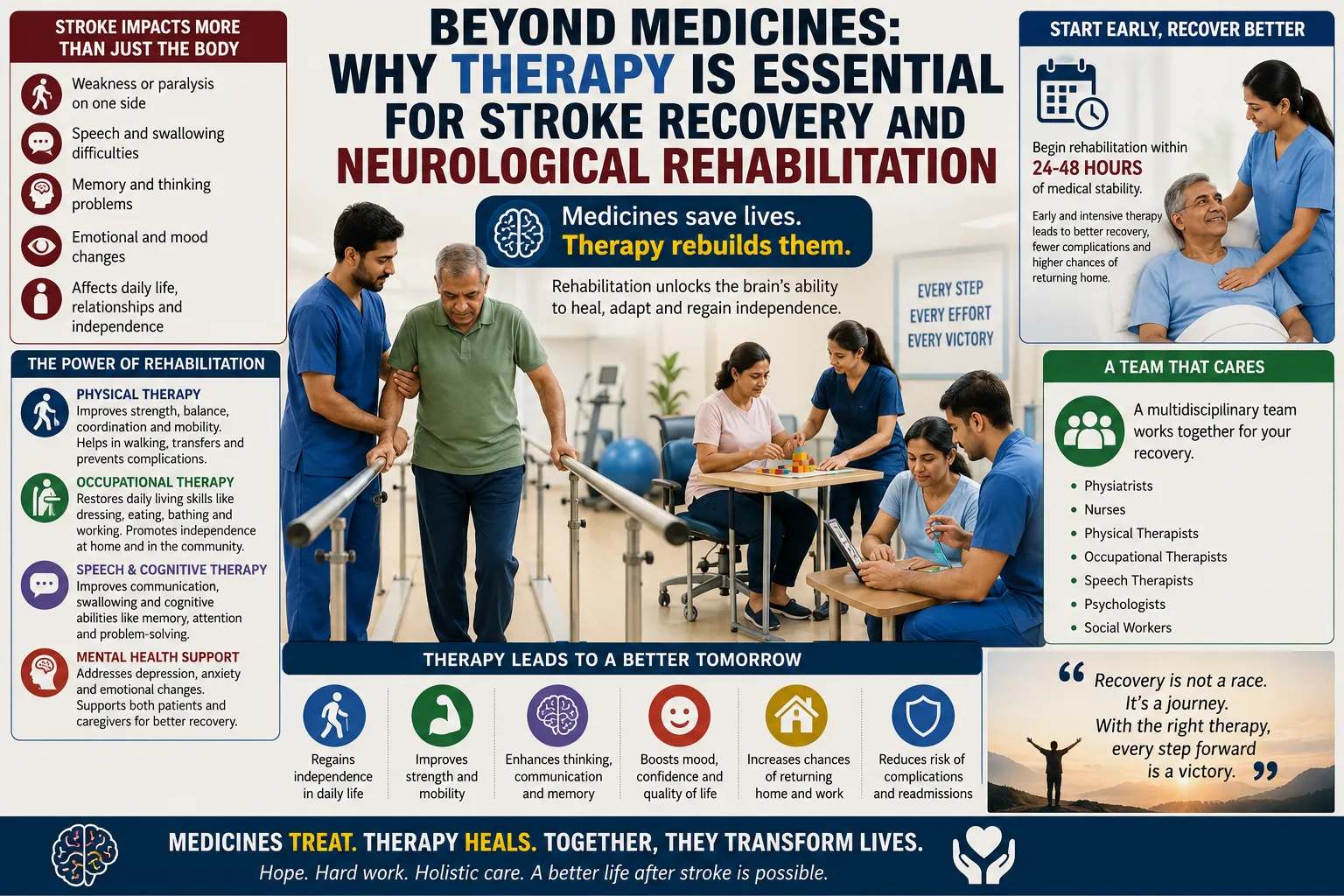
Rehabilitation is not an optional add-on but a cornerstone of recovery. It leverages the brain’s remarkable neuroplasticity — its ability to reorganize and form new neural connections even months or years after the initial event. Starting rehabilitation early, often within 24 to 48 hours once the patient is medically stable, significantly enhances outcomes.
Research consistently shows that individuals who participate in structured stroke rehabilitation programs achieve better functional recovery, reduced complications, and higher rates of returning home compared to those who do not.
The Multifaceted Nature of Stroke Impact
A stroke occurs when blood flow to the brain is interrupted, damaging cells and disrupting functions controlled by the affected area. Common consequences include paralysis or weakness on one side of the body, speech and swallowing difficulties, cognitive impairments such as memory loss or problem-solving challenges, vision problems, and emotional changes. These deficits affect not just physical abilities but also daily living, relationships, and mental well-being.
Medicines and surgery address the immediate threat — preventing further damage, managing blood pressure, or removing clots. However, they do not automatically restore lost functions. This is where a multidisciplinary rehabilitation team becomes indispensable. The team typically includes physical therapists, occupational therapists, speech-language pathologists, psychologists, and rehabilitation physicians who work together to create personalized recovery plans.
Physical Therapy: Rebuilding Strength and Mobility
Physical therapy (PT) forms the foundation of most stroke rehabilitation programs. It focuses on improving strength, balance, coordination, and mobility. Patients relearn basic movements such as sitting, standing, walking, and using affected limbs. Techniques range from simple exercises to advanced methods like constraint-induced movement therapy, where the unaffected limb is restrained to encourage use of the weaker side.
Early and intensive physical therapy can dramatically improve outcomes. For instance, gait training has been shown to help a significant percentage of patients regain community-level walking ability within weeks to months. PT also plays a preventive role by reducing risks of complications such as muscle stiffness (spasticity), contractures, pressure sores, and falls. For many survivors, regaining the ability to walk independently or perform transfers is a major milestone toward self-reliance.
Occupational Therapy: Restoring Daily Independence
Occupational therapy (OT) helps patients relearn essential activities of daily living — dressing, bathing, eating, cooking, and household tasks. Therapists assess the home environment and recommend adaptive equipment or modifications, such as grab bars, specialized utensils, or seating aids. The goal is functional independence, enabling survivors to participate meaningfully in family and community life rather than remaining dependent.
OT also addresses upper limb function, fine motor skills, and cognitive strategies for tasks requiring planning and sequencing. By focusing on practical, real-world activities, occupational therapists bridge the gap between clinical exercises and everyday life, boosting confidence and motivation.
Speech, Language, and Cognitive Therapy
Many stroke patients experience aphasia (difficulty speaking or understanding language), dysarthria (slurred speech), or dysphagia (swallowing problems). Speech-language pathologists provide targeted therapy to restore communication skills and safe swallowing, reducing risks of aspiration pneumonia. Cognitive rehabilitation targets memory, attention, executive function, and problem-solving deficits that can hinder return to work or social activities.
These therapies often incorporate technology, such as computer-based programs or apps, to make practice engaging and measurable. Consistent therapy helps patients rebuild neural pathways, with progress possible even in chronic stages.
The Critical Role of Mental Health Support
Stroke recovery is as much a psychological journey as a physical one. Up to one in three survivors experience depression, while anxiety affects about one in five. Emotional changes — irritability, apathy, emotional lability (uncontrollable laughing or crying), or grief over lost abilities — are common due to brain chemistry alterations and the trauma of the event.
Untreated mental health issues can severely hinder physical recovery by reducing motivation, participation in therapy, and adherence to medications. Psychological support, including counseling, cognitive behavioral therapy, support groups, and sometimes medication, is therefore essential. Addressing caregiver mental health is equally important, as family members often face stress, burnout, and depression.
A holistic approach that integrates mental health leads to better overall outcomes, including improved quality of life and lower risk of recurrent stroke. Rehabilitation settings that screen regularly for psychosocial needs and provide timely interventions set patients up for long-term success.
Timing, Intensity, and Long-Term Benefits
The first three months post-stroke offer the greatest window for recovery due to heightened brain plasticity, but meaningful gains can continue for months or years with persistent effort. Intensive, task-specific therapy — often exceeding 100-120 hours in focused programs — yields superior results. Rehabilitation can occur in various settings: inpatient facilities for intensive early care, outpatient clinics, home health services, or community-based programs.
Beyond individual benefits, effective rehabilitation reduces long-term healthcare costs by decreasing readmissions, institutionalization, and dependency. It empowers survivors to resume work, hobbies, and social roles, contributing positively to families and society.
Challenges and the Path Forward
Despite clear evidence supporting comprehensive therapy, access remains uneven. Barriers include limited availability of specialized centers, insurance constraints, geographic disparities, and lack of awareness. Many patients receive insufficient rehabilitation intensity or duration. Raising awareness among patients, families, and healthcare providers about the necessity of therapy — not just medicines — is crucial.
Emerging innovations such as robotic-assisted therapy, virtual reality, brain-computer interfaces, and telerehabilitation are expanding possibilities, making high-quality care more accessible. Continued research into personalized approaches based on stroke type, location, and patient genetics promises even better outcomes.
A Message of Hope and Action
Doctors and rehabilitation specialists consistently highlight a powerful truth: while medicines stabilize and surgery intervenes, therapy rebuilds lives. Stroke recovery is a team effort requiring patience, persistence, and comprehensive support. Families play a vital role by encouraging participation, celebrating small victories, and maintaining a positive environment.
For survivors and their loved ones, the journey may be challenging, but it is filled with potential. With dedicated physical, occupational, speech, cognitive, and mental health therapies, many individuals regain significant function and rediscover purpose. The key lies in viewing rehabilitation not as an afterthought but as an active, ongoing investment in recovery.
By prioritizing therapy alongside medical management, patients with stroke, brain injury, and neurological conditions can move beyond survival toward meaningful, independent, and fulfilling lives. This integrated approach represents the gold standard in modern neurological care and offers genuine hope for millions affected globally.
presslyy presslyy presslyy presslyy presslyy presslyy presslyy presslyy presslyy presslyy presslyy presslyy presslyy presslyy presslyy presslyy presslyy presslyy presslyy presslyy presslyy presslyy presslyy presslyy presslyy presslyy presslyy presslyy presslyy presslyy presslyy presslyy presslyy presslyy presslyy presslyy presslyy presslyy presslyy presslyy presslyy presslyy presslyy presslyy presslyy presslyy presslyy presslyy presslyy presslyy presslyy presslyy presslyy presslyy presslyy presslyy presslyy presslyy presslyy presslyy presslyy presslyy presslyy presslyy presslyy presslyy presslyy presslyy presslyy presslyy presslyy presslyy presslyy presslyy presslyy presslyy presslyy presslyy presslyy presslyy presslyy presslyy presslyy presslyy presslyy presslyy presslyy presslyy presslyy presslyy presslyy presslyy presslyy presslyy presslyy presslyy presslyy presslyy presslyy presslyy presslyy presslyy presslyy presslyy presslyy presslyy presslyy presslyy presslyy presslyy presslyy presslyy presslyy presslyy presslyy presslyy presslyy presslyy presslyy presslyy presslyy presslyy presslyy presslyy presslyy presslyy presslyy presslyy presslyy presslyy presslyy presslyy presslyy presslyy presslyy presslyy presslyy presslyy presslyy presslyy presslyy presslyy presslyy presslyy presslyy presslyy presslyy presslyy presslyy presslyy presslyy presslyy presslyy presslyy presslyy presslyy presslyy presslyy presslyy presslyy presslyy presslyy presslyy presslyy presslyy presslyy presslyy