
Apple has once again set the tech world abuzz after dropping a subtle but powerful teaser hinting at its next-generation MacBook lineup. In a post on X (formerly Twitter), Greg Joswiak, Apple’s Senior Vice President of Worldwide Marketing, wrote, “Something powerful is coming.” The cryptic message was accompanied by a short animation showing the glowing silhouette of what appeared to be a MacBook Pro, instantly sparking a storm of speculation online.
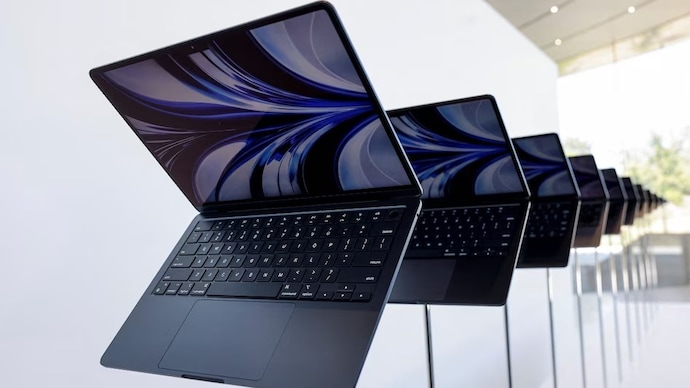
If the hints and timing are anything to go by, this likely signals the arrival of Apple’s long-awaited M5-powered MacBook, the next major step in its Apple Silicon roadmap. The company has been steadily upgrading its Mac lineup since transitioning away from Intel processors, and this next release looks poised to redefine what “pro performance” means for portable computing.
The Teaser That Broke the Internet
The teaser, which lasted only a few seconds, showed a familiar slim MacBook profile illuminated by streaks of light that eventually formed the shape of the Apple logo. What made it stand out, however, was the tagline “Power moves forward.” This was enough for industry watchers and fans alike to connect the dots to Apple’s upcoming M5 chip, rumored to be in advanced testing for months.
Within minutes of Joswiak’s post, hashtags like #MacBookM5, #AppleEvent, and #PowerfulIsComing began trending across tech communities. YouTube reviewers, analysts, and Apple enthusiasts have all weighed in, calling this “the calm before Apple’s next big storm.”
What We Know About the M5 Chip
While Apple has not confirmed any technical details yet, multiple supply chain reports and analyst notes have provided clues about what the M5 chip might bring to the table. Built on TSMC’s 2-nanometer process, the M5 is expected to deliver a major leap in both performance and energy efficiency compared to the M4, which debuted earlier in 2025 with the iPad Pro lineup.
Rumors suggest that the M5 could feature:
-
Up to 12 CPU cores, including 8 performance and 4 efficiency cores.
-
A 40-core GPU, designed to handle demanding creative and AI workloads.
-
Improved Neural Engine with up to 100 trillion operations per second (TOPS), making it ideal for on-device AI applications.
-
Unified memory support up to 48 GB or possibly 64 GB for high-end variants.
-
Advanced thermal management, allowing for sustained peak performance without overheating.
These specifications, if accurate, would make the M5 one of the most powerful laptop chips in the world — far outpacing Intel’s and AMD’s current offerings in performance-per-watt efficiency.
Design Expectations: Familiar, Yet Evolved
Apple’s teaser seems to hint at a MacBook that blends familiar aesthetics with subtle refinements. Industry sources suggest that while the overall design of the MacBook Pro will remain similar to the M3 and M4 models — featuring the aluminum unibody, mini-LED display, and MagSafe charging — Apple could introduce new color options and even thinner bezels.
There are also whispers of a redesigned keyboard and touchpad setup, enhanced spatial audio, and possibly new AI-based display optimizations. Some leaks point to a refreshed thermal system to accommodate the M5’s higher power output, ensuring quieter performance during demanding tasks like video editing or gaming.
https://terrificwishes.com/ | https://thematchplayerstats.com/ | https://chillguymemes.com/
https://officersdetails.com/ | https://theduaforyou.com/ | https://greblovz2004free.com/
AI and On-Device Intelligence: The Core Focus
The M5 MacBook is expected to be the first Apple laptop designed specifically with generative AI in mind. Apple CEO Tim Cook has already confirmed during WWDC 2025 that the company is working on integrating advanced AI capabilities across its devices through a new initiative called “Apple Intelligence.”
With the M5 chip’s upgraded Neural Engine, Apple is likely preparing for features such as:
-
Real-time language translation across apps.
-
On-device image generation and editing.
-
Smarter text suggestions and note summaries in macOS.
-
Improved Siri responsiveness with context awareness.
By processing these features on-device rather than in the cloud, Apple can maintain its hallmark privacy standards while still offering cutting-edge AI capabilities.
What Models Could Get the M5 Upgrade
Apple typically rolls out new chips in a tiered fashion. If patterns hold, the M5 chip could debut in the MacBook Pro (14-inch and 16-inch) models, with M5 Pro and M5 Max variants to follow. The MacBook Air and Mac mini could receive the base M5 chip later in 2026.
Some analysts also speculate that the M5-powered MacBook might be the first to support Wi-Fi 7 and Bluetooth 6, offering faster connectivity and lower latency for peripherals and online workflows.
Launch Date and Pricing
Although Apple hasn’t officially announced a launch event yet, industry watchers predict the M5 MacBook Pro could be unveiled later this month or in early November 2025. Historically, Apple has reserved October and November for its Mac-focused events, making the timeline plausible.
Pricing is expected to start around $1,999 for the 14-inch model and $2,499 for the 16-inch, depending on configurations. Premium versions with higher RAM and storage could reach the $3,499 range, especially for professionals working in design, 3D rendering, and video production.
The Bigger Picture: Apple’s Silicon Masterplan
Apple’s steady and aggressive innovation in chip design has made it one of the most formidable players in the semiconductor industry. The company’s M-series processors have consistently outperformed competitors in power efficiency, battery life, and raw computing capability.
The M5 marks a continuation of this trend — and possibly the start of a new phase where AI and hardware converge seamlessly. Analysts believe Apple could be aiming to position the MacBook not just as a work tool but as an AI workstation capable of handling tasks that once required high-end desktop GPUs.
As Dan Ives, a senior analyst at Wedbush Securities, put it:
“The M5 chip will be a defining moment for Apple’s Mac lineup. It’s not just about performance; it’s about redefining what users expect from an intelligent computer.”
Public Reaction: Excitement and Speculation
The online reaction to Apple’s teaser has been electric. Tech enthusiasts have flooded forums like Reddit and X with theories about potential performance gains, battery life improvements, and AI features. YouTubers and leakers are dissecting every frame of the teaser, searching for visual clues about design tweaks or hidden Easter eggs.
Memes, mock renders, and fan-made concept videos have already begun circulating, adding to the anticipation. Some fans even joked that Apple’s “something powerful” line could refer to a fusion-powered laptop — a playful nod to how powerful the M-series chips have become.
What This Means for Consumers
For professionals, developers, and creators, the M5 MacBook could be a game-changer. With expected boosts in GPU performance, users can look forward to smoother workflows in apps like Final Cut Pro, Blender, and Logic Pro. Gamers, too, might see a significant upgrade, as Apple continues to optimize macOS for modern gaming with improved Metal 3 APIs and support for leading engines like Unreal 5.
Students and general users, meanwhile, will benefit from faster multitasking, longer battery life, and quieter operation — hallmarks of Apple’s chip efficiency.
Conclusion: Power Meets Purpose
With its brief but impactful teaser, Apple has once again shown its mastery in building anticipation. The M5-powered MacBook represents not just another product launch but the continuation of a philosophy — one that merges cutting-edge performance with elegant design and user-centric innovation.
If the leaks and expectations hold true, this next generation of MacBooks could set a new benchmark for laptops, pushing the boundaries of what portable computing can achieve. As Apple says, “Power moves forward” — and with the M5, that power might just redefine the future of the Mac.