
The National Eligibility cum Entrance Test Undergraduate, popularly known as NEET-UG, is set to undergo one of the biggest reforms in its history. Union Education Minister Dharmendra Pradhan has announced that NEET-UG will move to a computer-based test (CBT) format from 2027. The decision comes in the wake of the massive controversy surrounding the alleged paper leak and subsequent cancellation of the 2026 examination.
The announcement marks a major shift in how India conducts one of its largest and most competitive entrance examinations. Every year, millions of students appear for NEET-UG seeking admission to MBBS, BDS, AYUSH, and other medical courses across the country. With concerns over exam integrity growing stronger after repeated allegations of malpractice, the government has now decided to overhaul the system with a stronger technology-driven approach.
Government Adopts Zero-Tolerance Policy
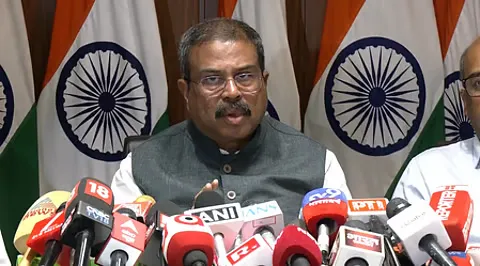
During his first press conference after the cancellation of the examination, Dharmendra Pradhan stated that the Centre has adopted a “zero tolerance” policy against examination malpractice. He stressed that the government would take strict action against individuals and networks involved in paper leaks and cheating rackets.
The National Testing Agency had earlier cancelled the NEET-UG 2026 examination after allegations surfaced that the question paper had leaked before the exam. The cancellation affected more than 22 lakh students across India and triggered widespread protests, anxiety, and criticism regarding the examination system.
According to official announcements, the re-examination for NEET-UG 2026 is scheduled to be held on June 21. The government and NTA have assured students that additional security measures will be implemented to ensure fairness and transparency during the re-test.
Why NEET-UG is Moving to CBT Mode
The move toward CBT mode is being viewed as part of a larger reform strategy aimed at reducing human intervention and minimizing opportunities for paper leaks. Computer-based examinations are already used for several national-level entrance tests, including JEE Main and various management entrance exams. By adopting a digital format, authorities hope to strengthen exam security, streamline logistics, and improve monitoring mechanisms.
Experts believe that a computer-based system can significantly reduce risks associated with printing, transporting, and storing physical question papers. In traditional pen-and-paper examinations, question papers pass through multiple stages before reaching examination centers, creating opportunities for leaks and tampering. In contrast, CBT exams rely on encrypted digital delivery systems that can provide better control and traceability.
The Impact of the Paper Leak Controversy
The paper leak controversy has once again highlighted the recurring problem of examination malpractice in India. Over the years, several competitive examinations have faced allegations of leaks, cheating, and organized fraud. NEET itself witnessed a major controversy in 2024 when allegations of irregularities and paper leaks sparked nationwide protests and legal battles.
Investigative agencies are currently probing the 2026 NEET paper leak case. The Central Bureau of Investigation has reportedly arrested multiple accused individuals and is investigating whether a larger network involving insiders and public servants played a role in the leak.
The controversy has also intensified scrutiny on the functioning of the National Testing Agency. The NTA has faced criticism in recent years over issues ranging from technical glitches to questions about transparency and exam management. Several educational experts and student groups have demanded structural reforms to restore confidence in the system.
Challenges Students May Face
For students, the shift to a computer-based examination will require a different preparation strategy. While the syllabus and difficulty level may remain unchanged, candidates will need to become comfortable with digital interfaces, online question navigation, and time management on computers. Many coaching institutes are expected to introduce CBT-based mock tests and practice modules to help aspirants adapt to the new format.
However, the proposed transition also raises concerns regarding digital infrastructure and accessibility. India has a vast and diverse student population, including candidates from rural and economically weaker backgrounds who may have limited exposure to computers. Ensuring equal access to technology and reliable examination centers will be crucial for the success of the new system.
Educational experts suggest that the government may need to conduct awareness programs, mock examinations, and digital training sessions before fully implementing the CBT model nationwide. Adequate infrastructure, stable internet connectivity, and technical support at examination centers will also be essential to avoid disruptions during the exam.
A Major Reform for India’s Education System
Despite these challenges, many students and parents have welcomed the reform, viewing it as a necessary step to improve transparency and credibility in the medical entrance examination process. Following the recent controversies, there has been growing demand for stricter monitoring systems and faster action against exam-related crimes.
Dharmendra Pradhan reiterated that the government is committed to protecting the interests of honest students and ensuring that merit remains the sole criterion for admission into medical colleges. He emphasized that strong reforms and technological interventions are necessary to safeguard the future of millions of aspirants.
The transition of NEET-UG into a computer-based examination from 2027 could become a defining moment in India’s examination system. If implemented effectively, it may not only improve security but also modernize the country’s approach to large-scale entrance testing. For lakhs of medical aspirants, the reform represents both a challenge and an opportunity as India prepares for a more technology-driven education landscape.
TrendioPR TrendioPR TrendioPR TrendioPR TrendioPR TrendioPR TrendioPR TrendioPR TrendioPR TrendioPR TrendioPR TrendioPR TrendioPR TrendioPR TrendioPR TrendioPR TrendioPR TrendioPR TrendioPR TrendioPR TrendioPR TrendioPR TrendioPR TrendioPR TrendioPR TrendioPR TrendioPR TrendioPR TrendioPR TrendioPR TrendioPR TrendioPR TrendioPR TrendioPR TrendioPR TrendioPR TrendioPR TrendioPR TrendioPR TrendioPR TrendioPR TrendioPR TrendioPR TrendioPR TrendioPR TrendioPR TrendioPR TrendioPR TrendioPR TrendioPR TrendioPR TrendioPR TrendioPR TrendioPR TrendioPR TrendioPR TrendioPR TrendioPR TrendioPR TrendioPR TrendioPR TrendioPR TrendioPR TrendioPR TrendioPR TrendioPR TrendioPR TrendioPR TrendioPR TrendioPR TrendioPR TrendioPR TrendioPR TrendioPR TrendioPR TrendioPR TrendioPR TrendioPR TrendioPR TrendioPR TrendioPR TrendioPR TrendioPR TrendioPR TrendioPR TrendioPR TrendioPR TrendioPR TrendioPR TrendioPR TrendioPR TrendioPR TrendioPR TrendioPR TrendioPR TrendioPR TrendioPR TrendioPR TrendioPR TrendioPR TrendioPR TrendioPR TrendioPR TrendioPR TrendioPR TrendioPR TrendioPR TrendioPR TrendioPR TrendioPR TrendioPR TrendioPR TrendioPR TrendioPR TrendioPR TrendioPR TrendioPR TrendioPR TrendioPR TrendioPR TrendioPR TrendioPR TrendioPR TrendioPR TrendioPR TrendioPR TrendioPR TrendioPR TrendioPR TrendioPR TrendioPR TrendioPR TrendioPR TrendioPR TrendioPR TrendioPR TrendioPR TrendioPR TrendioPR TrendioPR TrendioPR TrendioPR TrendioPR TrendioPR TrendioPR TrendioPR TrendioPR TrendioPR TrendioPR TrendioPR TrendioPR TrendioPR TrendioPR TrendioPR TrendioPR TrendioPR TrendioPR TrendioPR TrendioPR TrendioPR TrendioPR TrendioPR TrendioPR TrendioPR TrendioPR TrendioPR TrendioPR